


Meet Grant - a wine maker from Colorado who is trying to fulfill a spiritual passion he discovered about wine making. He lives in Northern Colorado, and despite the general beauty of the Front Range, growing wine grapes in this region is nearly impossible. He has immeasurable hurdles to overcome compared to other makers in other regions of the world. Wind, drought, hail, and a high desert environment make for a monumental task in his pursuit. But his passion runs very deep. He sees farming and freedom inextricably linked. Planting, harvesting, and making wine are connected to his soul’s liberation and love for the world around him.
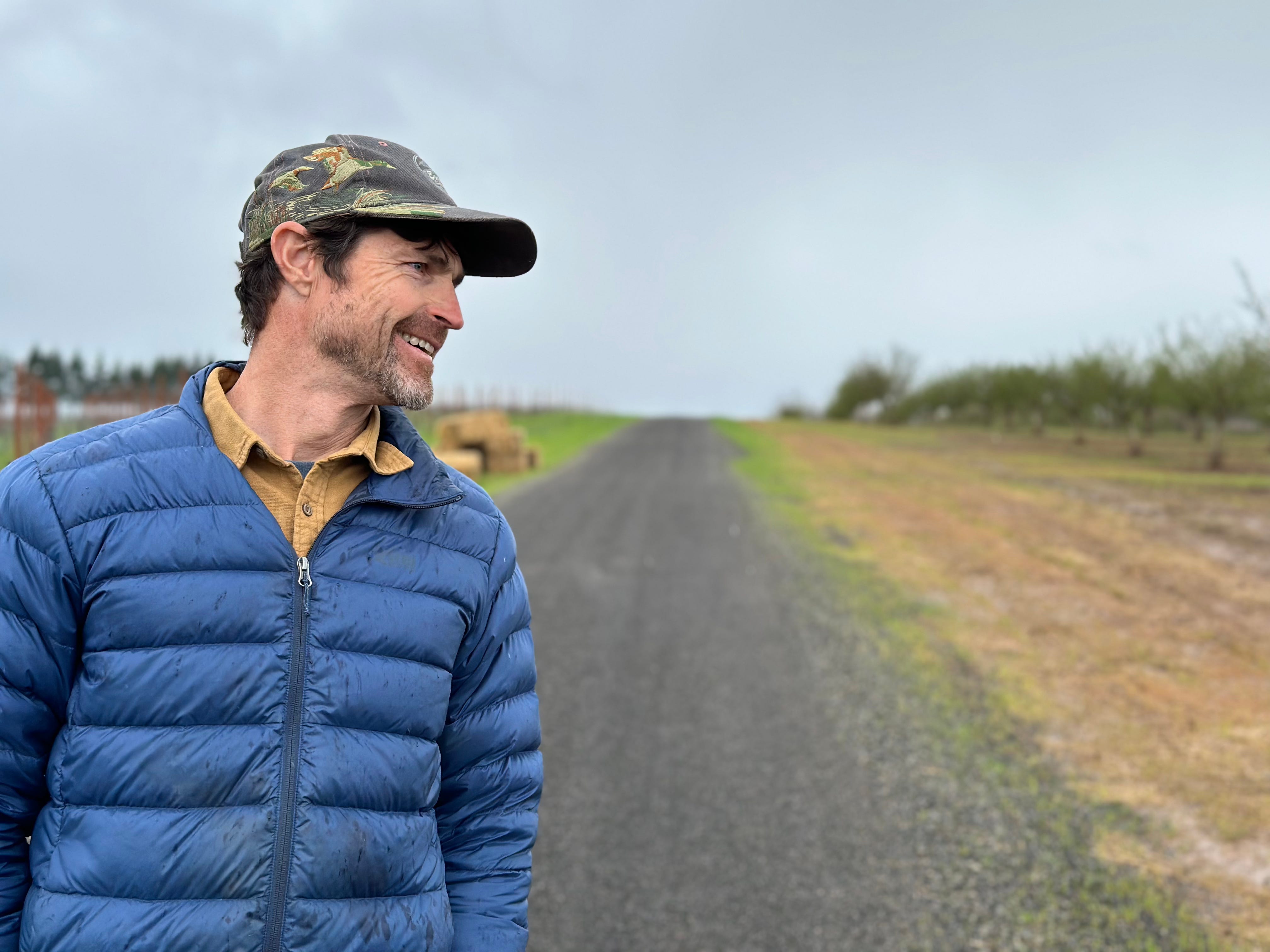
Small business in America is hard enough - obtaining the licensing, the permits, and the permissions can drive someone crazy, let alone adding the complexities of growing cold-hardy grapes in the high desert of Colorado. There was a time in America when farmers understood that their connection to the land was linked to their ability to pursue righteous government and a good life. But the small farmer has been relegated, as with most things in an ever more consolidating America, to the sideline, while the most connected and best funded are celebrated and given advantage in an ever greater industrialized enterprise.
But American small businesses are beautiful. Innovators like Grant want to find ways to make the world a better place and find a way to carve out a small piece of life on his land.
Recently, he travelled to the Willamette Valley to learn about the process of growing biodynamic wine. Compelled by its relations to the land and to the product, Grant has been researching and discovering this old-world way of making a drink most connected to life on earth. This, after all, is the beverage more than water that is written about in epochs and fables, and in religious celebrations and miracles - it is the lifeblood of life on earth, and it has been made in thousands of places around the globe as a way to preserve a harvest, and celebrate the bounty of good measure. Farmers have made wine for centuries without the aid of tractors or oak barrels, or pesticides - they have lived in harmony with the land, learning from its gifts, but also being keenly aware of its brutality. The beauty of wine is that every vintage has a story that is locked inside its bottle. It is glorious and tasty - colorful and cruel. Nature runs her course, and the grapes tell the story.
Learning about biodynamism is of the highest priority to a winemaker like Grant - because the harsher the landscape, the more you have to rely upon the earth to deliver the end results. Spraying pesticides and herbicides in a vineyard may have short-term benefits, but the longevity of the soil and the vines themselves are on life support the moment the first spray hits the leaves. Colorado’s soil is harsh and unforgiving. Our winters are cruel and filled with punishing cold and snow. The summers are mean and filled with indescribable heat, wind, and hail. Listening to the land is imperative to the success of a vintage.
His trip to Oregon yielded a great understanding of the process. What does it take to grow vines that yield their output upon the land’s treatment? How does working with the land, instead of against it, develop a wine that tells a story and is the catalyst for a story around the table? For many in our country, these terms sound superstitious and pseudo-religious. They are antithetical to the “science” of agriculture and industry. They seem silly and childlike and are no way to raise the volume of goods required for an advanced civilization. But our habitats are dying - the abuse we have placed upon them with corporatized agriculture and industrial production is becoming the modern-day Dust Bowl. Grant’s grandparents were from Oklahoma, and he remembers the tales that they would tell of dust clouds so large and dark that they would choke out the sun - so he is keenly aware that our practices in farming may very well contribute to the destruction of our own homeland. He realizes that, because of that heritage, regardless of any stance on the change in climate, the habitats we inhabit are struggling. The soil is producing less and less, and each year the crops require more natural resources in water and more chemicals to make the yields viable.
So Grant is in the valley to learn, to understand what the future in winemaking looks like. It adds no moniker to him. He isn’t radicalized or a political ideologue; he’s a farmer trying to understand what ancient methods look like and how they treated the habitat, and how they might once again be resurrected to treat the habitats of today.
He’s interested not only in his product but in the longevity of his business. He wants to understand what the land will yield if treated with goodness and humility. Stewardship is the care of the land that humanity has been charged with. Growing wine and hoping for it to be good and symbiotic is not a political issue - it is a human issue and one that has great compassion and beauty in it. These are the lessons lost in our ever-insatiable pursuit of more, which is leaving our ground in trouble. Humans and wine have an intertwined relationship and one of harmony. Wine gives goodness and depth to the human experience. What we have turned it into is another place to take from the bounty of earth, with deferred consequences for us and a burden upon the future generations. Winemakers have always been our most in-tune makers with the environment. They understand the changes in weather, water, and soil - and they craft their wines with the abundance of the year’s story embedded in every bottle.
Makers like Grant want the best of both worlds - to make a living on the land they know is the hub point of their freedom, and to let the land last for the duration of his story here on earth and beyond. As a species, we have to lean into these places more than we once did. We have extracted the bounty of the land in reckless abandon. Sacrificing today’s gain for tomorrow’s desolation.
America is the land of the beautiful farmer - a place where the freehold of land informs our liberty.
We owe ourselves the duty of asking our questions and building a better future upon our land. We were once the envy of the world for farming, and today our food is considered poison by most other people groups around the globe. What happened? Where did we lose our care for the liberty locked in our ground that is imperative to our survival?
We need to look to farmers like Grant, who are asking the better questions than those of politics and division. We should be wondering how we can live upon this earth in a manner that adds beauty, tells stories, and creates a future for those we will leave behind. This is the future of America. It won’t be solved in the dark halls of Washington. It will be solved in the vineyards of Colorado, in the rivers of New York, in the seagrass beds of Florida, and in the tide pools of Oregon. We can live a better life if we tell better stories. We can leave a better world if we can coax the grapes upon the Colorado desert to yield their story to the bottle.
Grant is my cousin, so I am biased towards his success. I want him to fulfill a passion to farm and create. I love how much it lights him up when I am with him at the winery or clipping grapes in the vineyard with him. I know Grant well; no one is closer to being a brother to me than he is. We have shared ski runs and rivers together. We have traveled to Italy and France together and have had more adventures than we can count. So his success is a big deal to me. I want him to have the best life, learning the rhythms of the seasons and the soil.
Alluvial Farm and Vineyards grow flowers for farmers’ markets, and raise sheep and pigs for the betterment of their land. I love my trips out to his farm. I love the conversations we have had about the taste of his wine, and the strategy for what finish the wines should have. Scott, the other writer and creator here at On The Uptick, and I love visiting with Grant about what we can do to help market his wines and make his labels. I love tasting this year’s vintage and reminiscing about our time in Corsica, where he lost a key to a bike lock, and we spent the next few days riding around on a pear-shaped tire after cutting the spokes. We have a lifetime of memories, and Grant is doing his best to make the land he lives on create something as beautiful as those memories in a bottle.
Wine making is hard work. It takes incredible patience and trust that the winds and the rains and the soils will treat his vineyard with just enough kindness, and just enough hardship that the grapes will yield something magical.
Grant does tours and tastings by appointment, so if you are ever in Northern Colorado, come visit with him. He’s an incredible human being and a wonderful friend. He will quickly become that for you, too.


Find out more about Alluvial Farm and Vinyards by clicking the link
So true - as you say, "Humans and wine have an intertwined relationship and one of harmony. Wine gives goodness and depth to the human experience." Wine and grapes are so often used in the bible to illustrate truths about life and our relationship to God. And real wine from a vineyard and winery like this can turn a good meal into a great meal. Thanks for another inspiring article about amazing people.